How Artificial Intelligence Is Revolutionizing Modern Education in 2025 💡📚
🎓 Introduction
Education is no longer limited to classrooms and textbooks — thanks to Artificial Intelligence (AI), learning in 2025 has become smarter, faster, and deeply personalized.
From AI tutors to predictive analytics, technology is transforming how students learn, how teachers teach, and how schools operate. Let’s explore how AI is revolutionizing modern education and shaping the future of learning.
🧠 1. Personalized Learning for Every Student
AI-powered systems can now understand a student’s strengths, weaknesses, and pace — creating customized learning paths for each individual.
Platforms like Khan Academy’s AI tutor, Google Classroom with Gemini, and Coursera AI Assist analyze student performance and deliver tailored lessons to maximize understanding.
📊 Example:
If a student struggles with algebra, the AI system adjusts the course, provides extra exercises, and even recommends short explainer videos — just like a private tutor.
💬 2. AI Tutors and Virtual Classrooms
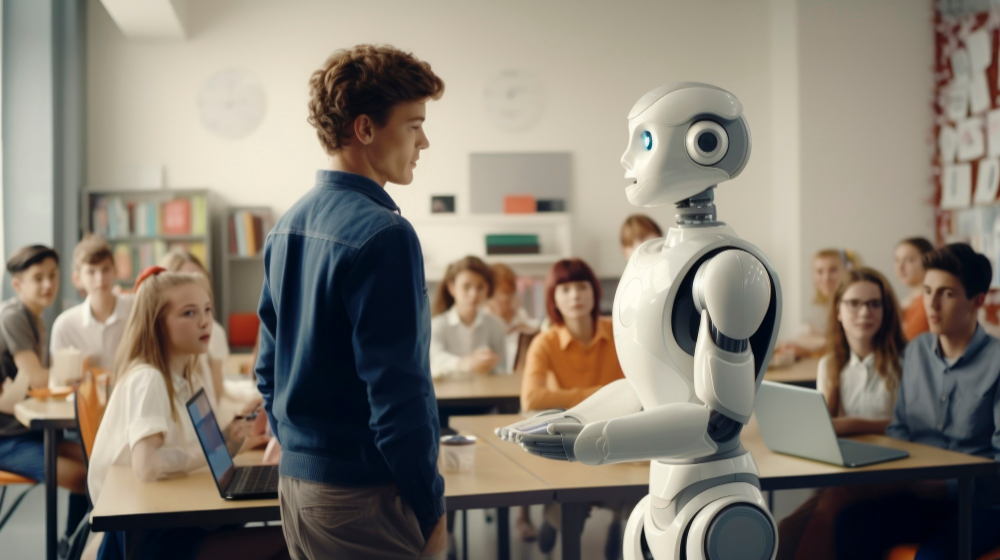
AI tutors are now available 24/7, providing instant feedback and support.
Unlike traditional teachers, AI bots can help students anytime, anywhere — guiding them through lessons, quizzes, or even emotional motivation.
🧩 Tools like Socratic by Google and ChatGPT for Education make complex subjects easier by simplifying explanations and offering practice questions.
🧾 3. Automated Grading and Administrative Tasks
Teachers spend hours grading assignments — but AI can now handle that in seconds.
AI-powered grading systems evaluate essays, quizzes, and coding projects with high accuracy.
📌 This frees up teachers’ time, allowing them to focus more on creativity, mentorship, and critical thinking instead of paperwork.
🏫 4. Smarter Classrooms and Predictive Analytics
In 2025, many universities use AI analytics to track student progress and predict who might need help.
These systems identify patterns — such as low participation or declining test scores — and alert teachers early, improving retention rates.
AI-driven attendance systems, smart whiteboards, and digital learning dashboards have also turned classrooms into interactive learning ecosystems.
🌐 5. Global Access to Quality Education
AI has broken the barrier of geography.
Students in remote villages now access the same resources as those in major cities — all through AI-driven e-learning platforms.
💻 Virtual classrooms powered by AI translation tools remove language barriers, enabling students from any country to learn together.
This democratization of education is making knowledge truly global.
💡 6. AI and Emotional Learning (EdTech 2.0)
New emotional AI systems can detect stress, boredom, or confusion through facial cues and voice analysis — adapting lessons to keep students engaged.
For example, if a student looks tired, the system may switch to interactive video mode or a quick quiz to refresh focus.
This is the beginning of empathetic AI in education — learning that responds to emotions, not just scores.
⚖️ 7. Challenges: Data Privacy & Human Touch
Despite its benefits, AI in education also faces challenges:
- Data privacy: Handling millions of students’ personal data responsibly.
- Dependence on tech: Risk of reduced human interaction.
- Bias in AI algorithms: Unequal results if not carefully trained.
The key is to balance technology with empathy — AI should assist, not replace, educators.
🌟 Conclusion
In 2025, Artificial Intelligence is not just supporting education — it’s redefining it.
Learning is now more adaptive, inclusive, and borderless than ever before.
As AI continues to evolve, one thing is clear:
The best education of the future will come from humans and AI working together — where technology empowers teachers and inspires learners worldwide.