
🎓 The Power of AI in Education — From Personalized Learning to Smart Classrooms (2025 Edition)
💡 Introduction
Education is evolving faster than ever — and at the heart of this transformation lies Artificial Intelligence (AI).
From adaptive learning systems to smart classroom assistants, AI is helping students learn smarter, faster, and more efficiently.
In 2025, AI isn’t just a buzzword — it’s a core part of how schools, colleges, and universities operate. Let’s explore how AI is reshaping education around the world. 🌍
🧠 1. Personalized Learning for Every Student
One of AI’s biggest strengths is its ability to personalize education.
AI-powered systems analyze how each student learns, tracks progress, and tailors lessons accordingly.
📌 Example: Platforms like Khan Academy’s Khanmigo and Socratic by Google provide customized explanations, quizzes, and study materials based on individual performance.
✅ Benefit: Students learn at their own pace — no one is left behind.
🏫 2. Smart Classrooms and AI Teaching Assistants
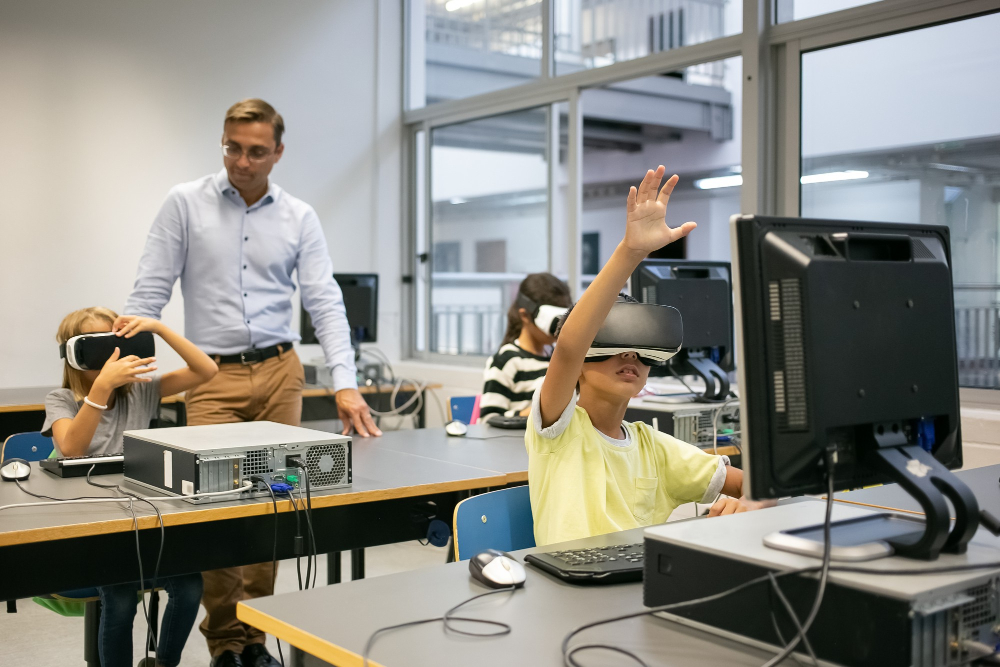
Modern classrooms are becoming interactive ecosystems with the help of AI.
Teachers use smart tools for real-time analytics, attendance tracking, and even emotion detection to understand student engagement.
📌 Example: AI-powered cameras and whiteboards can detect confusion or distraction and alert teachers to adjust their approach.
✅ Benefit: Teachers spend less time on manual tasks and more time on creative instruction.
📚 3. AI Tutoring and Homework Assistance
AI tutors like ChatGPT, Duolingo Max, and Quillionz act as 24/7 study companions.
They can explain difficult concepts, check grammar, or even generate quizzes to test understanding.
📌 Example: Ask ChatGPT — “Explain quantum mechanics in simple terms” — and it delivers an instant, clear explanation.
✅ Benefit: Students get help anytime, anywhere — not just during school hours.
📊 4. Smarter Assessment and Feedback
Traditional grading can be slow and inconsistent.
AI-driven assessment tools instantly grade assignments, provide detailed feedback, and identify areas for improvement.
📌 Example: Gradescope and Google Classroom with Gemini AI analyze answers and automatically highlight weak points.
✅ Benefit: Teachers save time, and students receive real-time insights for better learning outcomes.
🌍 5. Bridging Educational Gaps Globally
AI-powered translation and accessibility tools are making global education more inclusive.
Students who speak different languages or have disabilities can now learn easily with AI translators, voice readers, and captioning tools.
📌 Example: Google Translate AI and Microsoft Immersive Reader help make learning materials universally accessible.
✅ Benefit: Equal learning opportunities for students everywhere.
💬 6. Predictive Analytics for Student Success
AI can predict when a student might struggle and suggest early interventions.
This helps schools prevent dropouts and provide additional support to those who need it most.
📌 Example: AI systems flag low engagement or grades before it’s too late to help.
✅ Benefit: Proactive learning support instead of reactive problem-solving.
⚙️ 7. AI in Higher Education and Research
Universities are using AI for research automation, plagiarism detection, and project simulations.
Students use tools like ChatGPT, Scite.ai, and Research Rabbit to summarize academic papers and generate citations.
✅ Benefit: Faster, more accurate research — with less manual effort.
🧩 8. Challenges of AI in Education
While AI offers countless benefits, it also comes with challenges:
- Data privacy concerns for students
- Overreliance on technology reducing creativity
- Bias in AI algorithms that may impact grading fairness
Educators must balance AI assistance with human guidance and emotional intelligence.
🚀 Conclusion
AI has become the engine of modern education — enabling personalized learning, smarter classrooms, and equal opportunities worldwide.
But while machines can teach, it’s humans who inspire.
The future of education isn’t AI replacing teachers — it’s AI empowering them to teach better. 🌟